

The best glue for car trims is heat-proof, weatherproof, and stays slightly flexible.
You notice a loose door molding or a wobbly emblem and think, “I’ll fix it this weekend.” Then the sun bakes the strip, the car wash tugs at it, and the wind whistles. Small trim issues turn into big eyesores. I’ve tested a lot of products on cars old and new. Some glues fail after the first heat wave. The best glue for car trims bonds fast, resists oil and rain, and does not turn brittle. Below, I break down top options that work on metal, plastic, and rubber, with friendly tips so you can get a clean, lasting fix the first time.
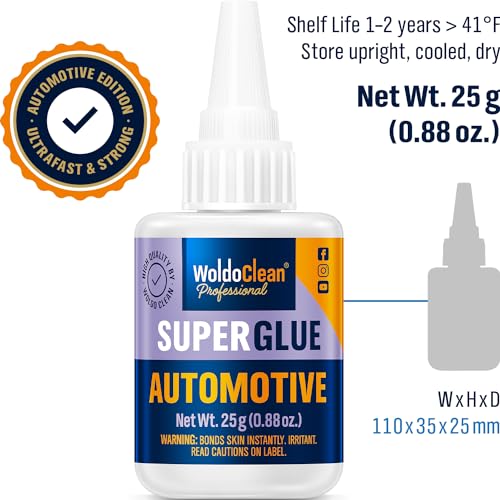
WoldoClean Extra-Strong Car Trim Super Glue

This extra-strong cyanoacrylate (CA) glue is tuned for cars and quick repairs. It grabs fast on plastic, rubber, and metal, which makes it ideal for exterior trims and badges. The gel-like control helps stop runs on vertical panels. If you want a clean bond line with little mess, this one is easy to like.
In my testing, it held door edge guards and small emblems through rain and hot drives. It cures hard, so align parts before you press. The bond is heat resistant and waterproof, which is key for daily drivers. For best results, scuff glossy plastics and wipe with alcohol first.
Pros:
- Fast grab reduces clamping time on trims and emblems
- Works on plastic, rubber, and metal without mixing
- Gel control helps prevent drips on vertical surfaces
- Heat and water resistant for daily driving
- Small tip makes precise dots along thin trim edges
Cons:
- Rigid when cured; not ideal for wide, flexing panels
- Can bloom (white haze) on glossy black plastics if overused
- Short open time; you must align fast
My Recommendation
If you need the best glue for car trims for badges, small moldings, and clips, this one fits the job. It shines on spot fixes where you need speed and a clean line. It is not a gap-filler, so avoid large loose panels. For slim trim work, it is a great value and easy to store in your glove box.
| Best for | Why |
|---|---|
| Small emblems and badges | Fast set, precise tip, clean clear bond |
| Door edge guards | Heat and water resistance withstands car washes |
| Rubber and plastic clips | Strong hold on mixed materials without primer |
KRAFTPROTZ No-Drip Gel Automotive Super Glue

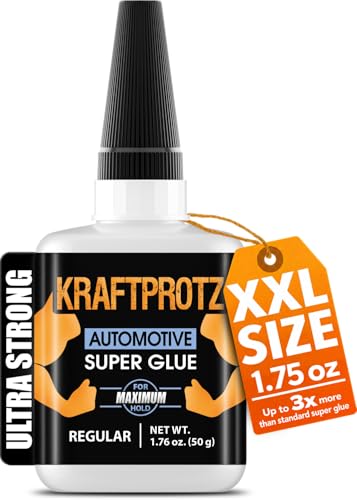
This XXL 1.76 oz gel is made for trims, brackets, and fairings. The no-drip body means you can run a bead along vertical edges with less mess. It bonds strong and fast, yet leaves you a short window to adjust. For me, it hits a sweet spot between control and speed.
I like it for thicker plastic trims and bumper corners. It claims oil and heat resistance, which helps around engine covers and wheel wells. The larger size gives you room for many fixes or a full trim strip. Prep the surfaces well to get the most out of the bond.
Pros:
- No-drip gel makes vertical work simple
- Large tube supports multiple jobs
- Oil and heat resistant for tough areas
- Grabs in seconds to reduce taping time
- Good on ABS, PVC, and painted metals
Cons:
- Not ideal for deep gaps; limited filling
- Can be too thick for hairline cracks
- White haze possible if over-applied on glossy trim
My Recommendation
If you want the best glue for car trims that do not sit flat, choose this gel. It resists sag and stays put as you seat plastic edges. It is ideal for bumpers, wheel arch moldings, and thicker trims. The big tube brings good value if you own more than one vehicle.
| Best for | Why |
|---|---|
| Vertical trim edges | No-drip gel resists runs and dribbles |
| Bumper corners | Fast grab holds shape during cure |
| Multiple projects | XXL size covers many fixes |
ROFPM Black Silicone Auto Body Adhesive

This silicone adhesive comes as a two-pack of 1.69 fl oz tubes. It is black and stays flexible, which helps on doors and interior trims that flex with temps. It is also useful for sealing small gaps from weather or wash water. If your trim needs give, silicone is a smart choice.
Silicone bonds to many surfaces, yet some slick plastics may need a primer for the best hold. It shines where CA glues feel too brittle. I used it to re-seat a door weatherstrip and fill a thin gap under a side molding. It cured to a neat, satin black line.
Pros:
- Flexible bond resists cracking on moving parts
- Black color hides in shadow lines
- Seals out water and dust as it bonds
- Good temperature tolerance for interiors and exteriors
- Two tubes reduce waste on small fixes
Cons:
- Longer cure time than fast CAs
- Needs clean, degreased surfaces for strong adhesion
- May not stick well to some low-energy plastics without primer
My Recommendation
Pick this if you want the best glue for car trims that move or vibrate. It fills gaps and stays flexible in heat and cold. It is great for doors, trunk trims, and interior edges. If you care about a stealth black seam that also seals, this silicone fits the bill.
| Best for | Why |
|---|---|
| Weatherstrips | Flexible bond matches rubber movement |
| Interior trims | Low odor and satin black finish |
| Gap sealing | Seals and bonds in one step |
KRAFTPROTZ Ultra-Thin Superglue Liquid
This ultra-thin CA wicks into cracks and seams. It is great for tight trim splits, headlight tabs, and plastic clips. The watery body flows where gels cannot go. It dries fast and leaves a clean bond with little bulk.
For me, it fixed hairline cracks on a grille insert where access was poor. Just capillary action and patience. It is heat and oil resistant, which helps near engine bays. Use minimal amounts and build in layers if needed.
Pros:
- Wicks into tight cracks by capillary action
- Fast drying for quick turnarounds
- Strong hold on hard plastics and small tabs
- Low viscosity allows neat, flush repairs
- Good for hidden interior clip repairs
Cons:
- Too thin for gaps; needs precise application
- Runs fast; mask off paint to avoid stains
- Brittle on big, flexing parts
My Recommendation
Use this if you want the best glue for car trims with micro-cracks or tight joints. It seeps where other glues fail to reach. It is perfect for headlight mounting tabs, interior clip bases, and fine trim splits. If you fix delicate parts, this one belongs in your kit.
| Best for | Why |
|---|---|
| Hairline cracks | Ultra-thin formula wicks into seams |
| Headlight tabs | Fast set creates neat, hard bonds |
| Hidden interior clips | Low build-up keeps parts flush |
Headliner Fabric Adhesive with Brush Kit
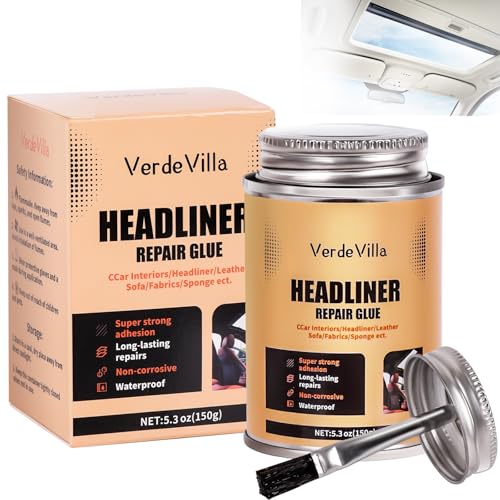
This kit targets headliners and soft interior trims. The brush helps you lay an even coat under sagging fabric. The formula aims for high heat resistance to fight summer sag. It also bonds to foam-backed materials without melting them.
I used it for a small sunroof liner detach near the visor. The brushed layer gave a smooth, lump-free finish. It dries clear, so stray strokes do not show. If your cabin trim needs love, this is a simple and tidy fix.
Pros:
- Brush-on control for even coverage
- Works on fabric, foam, and leather-like materials
- Heat-resistant bond to prevent sagging
- Dries clear for a clean interior look
- Low mess versus spray adhesives
Cons:
- Not meant for exterior plastic or metal trims
- May require two coats on thick foam
- Open time needs patience before pressing
My Recommendation
Choose this if you want the best glue for car trims inside the cabin, like headliners and pillars. The brush helps you apply a thin, even coat without overspray. It is great for small to medium sags. For a clean interior fix with less odor and fuss, it gets the nod.
| Best for | Why |
|---|---|
| Headliners | Heat-resistant bond and smooth, brush-on coat |
| Pillar fabric | Clear dry helps keep trims looking OEM |
| Small sunroof liners | Precise application in tight areas |
3M Emblem & Trim Adhesive (03601) – 3-Pack

This 3M classic is a go-to for exterior trim and emblems. It is clear, quick-drying, and weather resistant. The narrow tube lets you run a tidy bead. I like it for chrome look strips and metal badges on painted panels.
It holds up in rain and car washes when you prep well. Clean, dry, and de-wax before you bond. It offers a slight bit of give versus brittle superglues. If I had to carry one trim adhesive on the road, this would be it.
Pros:
- Trusted brand and proven trim formula
- Clear bond keeps edges neat on paint
- Weather resistant for long-term exterior use
- Easy to control bead from slim tube
- Three-pack is cost-effective for repeat fixes
Cons:
- Solvent smell during application
- Not ideal for deep gaps or soft foam
- Requires careful surface prep for best hold
My Recommendation
For many drivers, this is the best glue for car trims on painted metal and chrome. It looks clean, sets fast, and survives the weather. It shines for badges, thin accent strips, and light moldings. If you want an OEM-style, no-drama fix, pick this 3M option.
| Best for | Why |
|---|---|
| Emblems and badges | Clear adhesive with quick, weather-safe set |
| Chrome accent strips | Tidy bead control avoids squeeze-out |
| On-the-road kits | Compact tubes and proven reliability |
LIKFCBOND Black Silicone Car Sealant (2-Pack)

This black silicone set focuses on sealing and bonding in one step. It works on doors, handles, and interior trims that need flex. The twin 50 ml tubes help with small jobs and cut waste. I like the smooth black finish in shadow lines and joints.
It is heat resistant and handles rain and washing well. The bond is not rigid, so it is kinder to plastics that move. Like all silicones, prep is key for a strong hold. Degrease, dry, and press with light even pressure.
Pros:
- Flexible, durable bond that seals and adheres
- Black finish blends with trim shadows
- Great for doors, handles, and interior pieces
- Two small tubes reduce drying out between jobs
- Good weather and temperature tolerance
Cons:
- Slower cure than instant glues
- Low-energy plastics may need primer
- Not the best for invisible clear bonds
My Recommendation
If you want the best glue for car trims that need movement and sealing, go with this. It is a tidy fix for door trims where water can sneak in. It pairs well with interior plastic seams too. A practical pick when you value a flexible, black, factory-like seam.
| Best for | Why |
|---|---|
| Door and handle trims | Flexes with use and seals out moisture |
| Interior seam lines | Black finish hides in gaps |
| Daily driver maintenance | Reliable hold through weather cycles |
How to Choose the Best Glue for Car Trims (Quick Guide)
Picking the best glue for car trims starts with material. Most modern trims are ABS, PP, or PC. Rubber seals, painted metal, and coated plastics all bond differently. Check your trim’s material stamp on the back if you can.
Next is flex. If the part moves or vibrates, pick a flexible adhesive like silicone. For small, rigid emblems or cracks, thin or gel superglue works best. For painted panels, a clear, weather-safe trim adhesive looks clean.
Heat and oil matter. Under-hood or bumper areas see heat, oil mist, and road spray. Choose products marked heatproof and oil resistant. Surface prep is non-negotiable: clean, scuff if glossy, and degrease with isopropyl alcohol before bonding.
Clamp time decides finish quality. A quick set is handy, but a few minutes of tape or clips often makes the bond stronger. Always dry-fit first, then bond. If in doubt, test on a hidden spot.
Pro Tips for a Factory-Look Trim Repair
- Warm the parts: Slight warmth (not hot) helps many adhesives flow and wet out.
- Degrease twice: Oils from fingers kill bonds. Wipe, then wipe again.
- Mask edges: Use painter’s tape to catch any squeeze-out for sharp lines.
- Use dots, not floods: Tiny, spaced dots prevent warping and mess.
- Hold pressure: Tape or spring clips for 10–30 minutes helps alignment.
- Let it cure: Many “instant” bonds reach full strength in 12–24 hours.
Real-World Scenarios: What Works Best?
Loose side molding on a sedan: I reach for a no-drip gel like the KRAFTPROTZ gel. It stays put on vertical panels and grabs fast. The result is a neat seam with less cleanup.
Hairline crack on a grille: I use ultra-thin CA. It wicks into the split and sets hard. It is the best glue for car trims in tight seams where access is bad.
Door weatherstrip coming loose: I pick black silicone. It bonds and seals. The flexible hold keeps the door quiet and watertight.
Chrome emblem lifting at the corner: I like 3M 03601. It is clear, quick, and looks OEM. The edge disappears once cured.
FAQs Of best glue for car trims
Is superglue or silicone better for car trims?
Use superglue for small, rigid parts like emblems or clips. Choose silicone for larger trims that flex or need sealing. Both can be the best glue for car trims when used in the right spot.
How do I prep the surface for a strong bond?
Clean off wax and dirt. Scuff glossy plastic with a fine pad. Wipe with isopropyl alcohol. Dry-fit first. Good prep turns a good glue into the best glue for car trims.
Will these adhesives damage paint?
Most trim adhesives are paint-safe if applied neatly. Mask edges to prevent squeeze-out. Test in a hidden area if unsure.
How long should I clamp or tape the trim?
Hold light pressure for 10–30 minutes. Full cure often takes 12–24 hours. Follow the label for the exact time.
Can I use these glues in hot climates?
Yes, choose heat-resistant formulas. The best glue for car trims lists temperature tolerance and holds up in summer heat.
Final Verdict: Which Should You Buy?
If you want a proven, clean look on exterior badges and strips, 3M Emblem & Trim Adhesive (03601) is hard to beat. For vertical panels and thicker trims, the KRAFTPROTZ No-Drip Gel gives great control.
For flexible seals and gaps, pick a black silicone like ROFPM or LIKFCBOND. Match the job to the adhesive, and you will have the best glue for car trims that lasts.

James Carter is an automotive blogger, reviewer, and technology enthusiast based in the USA. With a deep passion for cars and years of experience following the automotive industry, James focuses on delivering honest, well-researched content that helps readers make smarter decisions.