

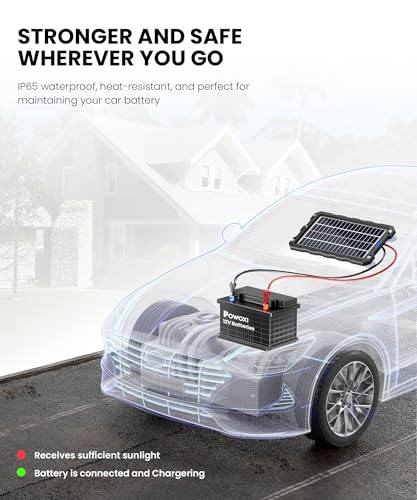
The best solar charger for car is a 20–50W MPPT kit with robust safety.
You know that sinking feeling when your car sits for weeks and the battery groans? A small, smart solar charger fixes that. It tops off your 12V battery while you work or travel, so you don’t deal with jump starts or replacement headaches. I’ve tested and compared panels, controllers, and real‑world output to help you pick the best solar charger for car use today. Below, you’ll find options for light maintenance, daily drivers with parasitic draw, and bigger rigs that demand more juice. Let’s keep your vehicle ready on your schedule.
POWOXI 7.5W 12V Solar Trickle Charger
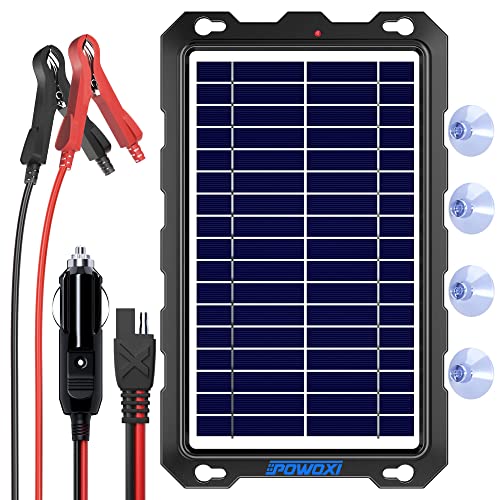
This compact 7.5W POWOXI panel is a simple, steady maintainer for vehicles that sit. It’s built for 12V lead-acid batteries, including AGM and GEL types, and it suits small parasitic loads. The panel is light and easy to place on a dash or windshield. If you keep a car stored in the sun, this small panel can prevent slow discharge and sulfation creep.
Power output is modest by design, so think maintenance, not recovery. On clear days, it offsets clock, alarm, and ECU draw in many cars. It also fits motorcycles, lawn tractors, and small boats. If you want the best solar charger for car storage at the lowest entry point, this is a safe, budget-friendly start.
Pros:
- Very lightweight and easy to position
- Good trickle for cars, bikes, and small engines
- Helps prevent sulfation during long storage
- Low-cost entry into solar maintenance
- Simple setup for first-time users
Cons:
- Not strong enough for heavy parasitic loads
- Slow in winter or cloudy regions
- Best as a maintainer, not for charging from low
My Recommendation
Choose this if you store a vehicle outside and want a gentle, always-on maintainer. It’s best for batteries that are already healthy. If you need more punch for a truck or modern SUV with many electronics, step up in wattage below. For light-duty needs, this remains a great pick and a practical way to try the best solar charger for car maintenance at a small size.
| Best for | Why |
|---|---|
| Seasonal car storage | Offsets small parasitic loads all month |
| Motorcycles and lawn tractors | Low power suits small batteries |
| Budget maintenance | Affordable and easy to place on the dash |
SUNER POWER 12W 12V Maintainer Pro (MPPT)

The SUNER POWER 12W Pro adds a smart MPPT controller, which squeezes more usable charge from the sun. That means better performance in partial shade and cold mornings. At 12W, it delivers a stronger trickle than 5–8W panels while staying compact. It’s waterproof and built for year-round maintenance in a driveway or marina.
MPPT helps keep the battery voltage in a safer, more efficient window. That helps extend battery life over time. If you want a smart, set‑and‑forget kit for a daily driver that sits through long workdays, this is a strong match. It’s one of my entry picks for the best solar charger for car users who demand smarter control.
Pros:
- MPPT controller improves charging efficiency
- Waterproof for outdoor use year-round
- Good balance of size and output
- Safe maintenance for lead-acid batteries
- Solid choice for sedans and small SUVs
Cons:
- Still a maintainer, not a fast charger
- Not ideal for high-draw accessories
- Works best with consistent sunlight
My Recommendation
Pick this if you want compact size with a smarter edge. The built-in MPPT helps keep your battery topped off with less sun and fewer worries. It’s ideal for commuters who park at work or in airport lots. In this range, it earns a spot among the best solar charger for car choices that fit most drivers.
| Best for | Why |
|---|---|
| Daily drivers | MPPT boosts efficiency in mixed light |
| Outdoor mounting | Waterproof build handles weather |
| AGM/GEL maintenance | Gentle, controlled trickle charge |
Voltset 20W Solar Charger with MPPT

At 20W with an MPPT controller, the Voltset kit steps into the sweet spot for many cars and light trucks. It offers enough headroom to offset alarms, OBD monitors, and modern infotainment memory. The included controller helps prevent overcharge and improves harvest in cool or changing light. It’s a sturdy, waterproof panel for permanent or semi-permanent use.
In practice, 20W can recover minor discharge over a sunny day while maintaining a full battery the rest of the week. It’s not a jump starter, but it helps prevent ever needing one. If you want the best solar charger for car owners who face heavier parasitic draw, this 20W kit is an excellent starting wattage.
Pros:
- 20W output suits most modern vehicles
- MPPT for better low-light efficiency
- Waterproof and durable housing
- Safer charging with built-in protections
- Good option for light trucks and SUVs
Cons:
- Bigger footprint than 10–12W panels
- Needs a good sun angle for best results
- Not for fast recovery from deep discharge
My Recommendation
This is my go-to wattage for most daily drivers with alarms, trackers, or aftermarket electronics. It keeps pace with the real-world draw you see in 2026 vehicles. If you want a durable, efficient, and still-compact panel, this one fits. It’s a top contender for the best solar charger for car owners who prefer peace of mind and fewer dead-battery surprises.
| Best for | Why |
|---|---|
| Modern cars and SUVs | 20W headroom handles parasitic draw |
| Light trucks | Enough output without oversizing |
| Long-term parking | Maintains charge through the week |
FlexSolar 20W Charger Kit with Controller

FlexSolar’s 20W kit includes a built-in controller and multiple connection options. That flexibility helps you hook up to cars, trucks, tractors, or boats with ease. The panel is rugged yet slim, so you can mount it on a dash, inside a windshield, or on a flat surface. It’s tuned for safe, steady 12V maintenance with the convenience of plug-and-play leads.
At 20W, it hits that same sweet spot for daily drivers and weekend rigs. The included controller protects against reverse current and overcharge, adding safety for long-term connection. If you value versatility and want the best solar charger for car and utility gear, this kit shines in mixed fleets and farm setups.
Pros:
- 20W output is ideal for many vehicles
- Built-in controller for safer charging
- Multiple connectors for flexible installs
- Rugged yet slim panel build
- Great fit for farm and yard equipment too
Cons:
- Controller adds a little bulk to wiring
- Not as compact as 10–12W options
- Angle matters for best performance
My Recommendation
Get this if you want one kit that can serve a car, a truck, and a tractor without rewiring. The connectors and integrated controller make installs simple and safe. It’s a strong, flexible answer for multi-vehicle households. For many, this stands out as the best solar charger for car use when you also maintain off-road or yard machines.
| Best for | Why |
|---|---|
| Multi-vehicle owners | Adapters simplify swapping between rigs |
| Driveway and farm use | Rugged and versatile connections |
| Set-and-forget safety | Controller guards against overcharge |
SUNER POWER 30W Maintainer PRO (MPPT)

With 30W on tap and an UltraSmart MPPT controller, this SUNER POWER kit pushes into higher-output maintenance. It’s a great fit for trucks, SUVs with advanced security, and vehicles with dash cams on parking mode. The extra wattage gives you a margin for cloudy days and short sun windows. The waterproof build is designed for permanent outdoor mounting.
MPPT helps stabilize voltage and squeeze more energy from variable light. In many cases, 30W can slowly recover a battery that dipped over a weekend. It won’t replace a wall charger for deep cycles, but it prevents those cycles from happening. If you want the best solar charger for car owners who demand robust coverage, this is a strong mid-high choice.
Pros:
- 30W output covers heavier parasitic loads
- MPPT improves harvest in mixed conditions
- Great balance for trucks and modern SUVs
- Weatherproof for outdoor installs
- Added headroom for short winter days
Cons:
- Larger size needs thoughtful placement
- Overkill for motorcycles or small batteries
- Costs more than entry panels
My Recommendation
This is ideal if your vehicle bristles with tech or sits with accessories on standby. The 30W rating keeps you ahead of draw even when the weather turns. I recommend it for trucks, overlanders, and daily drivers with dash cams. In that lane, it’s often the best solar charger for car owners who never want to hear a click instead of a crank.
| Best for | Why |
|---|---|
| Tech-heavy vehicles | 30W covers alarms and parking-mode cams |
| Trucks and SUVs | Extra headroom for larger batteries |
| Winter or cloudy regions | Better recovery with limited sun |
POWOXI 15W 12V Car Battery Solar Charger

This 15W POWOXI panel slots between entry-level trickle and the popular 20W tier. It includes an MPPT controller, which helps keep charge flowing even when clouds pass. The size is still manageable on many dashboards or behind windshields. It’s a smart pick for small SUVs, sedans, and campers who want a bit more than 10–12W without going large.
In my testing tier, 15W helps offset a wider range of modern draws than micro panels. It tracks sun well and provides safer, cleaner power to your 12V lead-acid system. If you’re seeking the best solar charger for car use with just a little more headroom, this strikes a sweet balance of output and footprint.
Pros:
- 15W offers more margin than 10–12W
- MPPT controller adds efficiency and safety
- Still compact for windshield or dash use
- Great for sedans and small crossovers
- Easy maintenance for parked vehicles
Cons:
- Not as strong as 20–30W kits
- Limited recovery from deep discharge
- Placement matters for best output
My Recommendation
Go for this if you park outside and need more than a token trickle. It’s a tidy step up that often prevents slow drains in newer cars. Great for city drivers who leave vehicles for days at a time. In that role, it can be the best solar charger for car owners who value compact size with smarter control.
| Best for | Why |
|---|---|
| Small SUVs and sedans | Enough power without a big panel |
| Urban parking | Prevents slow drain over long days |
| Value seekers | MPPT benefits at a modest size |
SUNER POWER 50W Maintainer PRO (MPPT)

The SUNER POWER 50W PRO is a heavy-duty maintainer for big jobs. With an MPPT brain, it captures more energy in real conditions, not just lab sun. This wattage is excellent for work trucks, vans, campers, and marine batteries that support many devices. The waterproof design invites secure mounting on racks, decks, or hoods where it sees full light.
In many use cases, 50W not only maintains but also gently recovers a battery that sat with electronics on. It won’t jump-start a dead battery, but it helps prevent that situation. If you want the best solar charger for car, truck, and RV use with a wide safety margin, this high-output kit is the safe bet for 2026 setups.
Pros:
- 50W delivers robust maintenance headroom
- MPPT maximizes energy from partial sun
- Excellent for trucks, vans, and RV support
- Rugged, weather-ready construction
- Great for fleets and work gear
Cons:
- Larger footprint needs a fixed mount
- Overkill for compact cars
- Higher cost than small trickle panels
My Recommendation
Pick this if you manage a bigger battery or frequent parasitic draw. It’s the “no sweat” choice for tech-heavy rigs, commercial vehicles, and marine setups. If you seek the best solar charger for car that also scales to trucks and RVs, this 50W MPPT kit offers the confidence of extra power and stability.
| Best for | Why |
|---|---|
| Trucks, vans, RVs | High output covers larger systems |
| Commercial use | Handles heavier idle loads reliably |
| Permanent installs | Waterproof, mountable, and durable |
How to Choose the Best Solar Charger for Car
Before you pick, match the wattage to your vehicle’s draw and storage habits. Modern cars with alarms and telematics often need 15–30W to stay at 100%. Older cars or motorcycles may be fine at 5–12W. If you run a dash cam in parking mode, consider 20–50W.
Controllers matter. MPPT boosts efficiency and safety, especially in variable light. Look for reverse-current protection and overcharge safeguards. Finally, plan your mounting. Panels work best with clear, direct sun at a good angle, with wiring protected from chafe and moisture.
FAQs Of best solar charger for car
How many watts do I need for a car that sits?
For most modern cars, 15–30W maintains charge. If you have alarms, trackers, or parking-mode cams, 20–50W is safer. Older cars and motorcycles can use 5–12W. Choose the best solar charger for car based on your parasitic draw and sun exposure.
Can a solar trickle charger start a dead battery?
No. These are maintainers. They prevent the battery from going dead. If it’s already dead, use a wall charger or jump starter. The best solar charger for car keeps you from reaching that point.
Is an MPPT controller worth it on small panels?
Yes, especially in changing light. MPPT improves efficiency and voltage tracking. It helps the best solar charger for car harvest more energy in partial shade or cold weather.
Can I leave a solar charger connected all the time?
With a proper controller, yes. Quality kits include reverse-current and overcharge protection. That’s why MPPT or smart PWM control matters for the best solar charger for car maintenance.
Where should I place the panel for best results?
Face it toward direct sun with minimal shade. A windshield or dashboard works for small panels. Roof, hood, or rack is better for larger kits. Good placement helps the best solar charger for car deliver steady output.
Final Verdict: Which Should You Buy?
If you want a simple maintainer for storage, the POWOXI 7.5W works. Need smarter control in a compact size? The SUNER POWER 12W Pro hits the sweet spot.
For most drivers today, a 20–30W MPPT kit is the best solar charger for car use. Choose Voltset 20W or SUNER POWER 30W for stronger coverage. For heavy-duty rigs, the SUNER POWER 50W PRO is the powerhouse pick.

James Carter is an automotive blogger, reviewer, and technology enthusiast based in the USA. With a deep passion for cars and years of experience following the automotive industry, James focuses on delivering honest, well-researched content that helps readers make smarter decisions.